The Best Way to See the Changing of the Guard in London (Without Getting Stuck Behind 500 People)
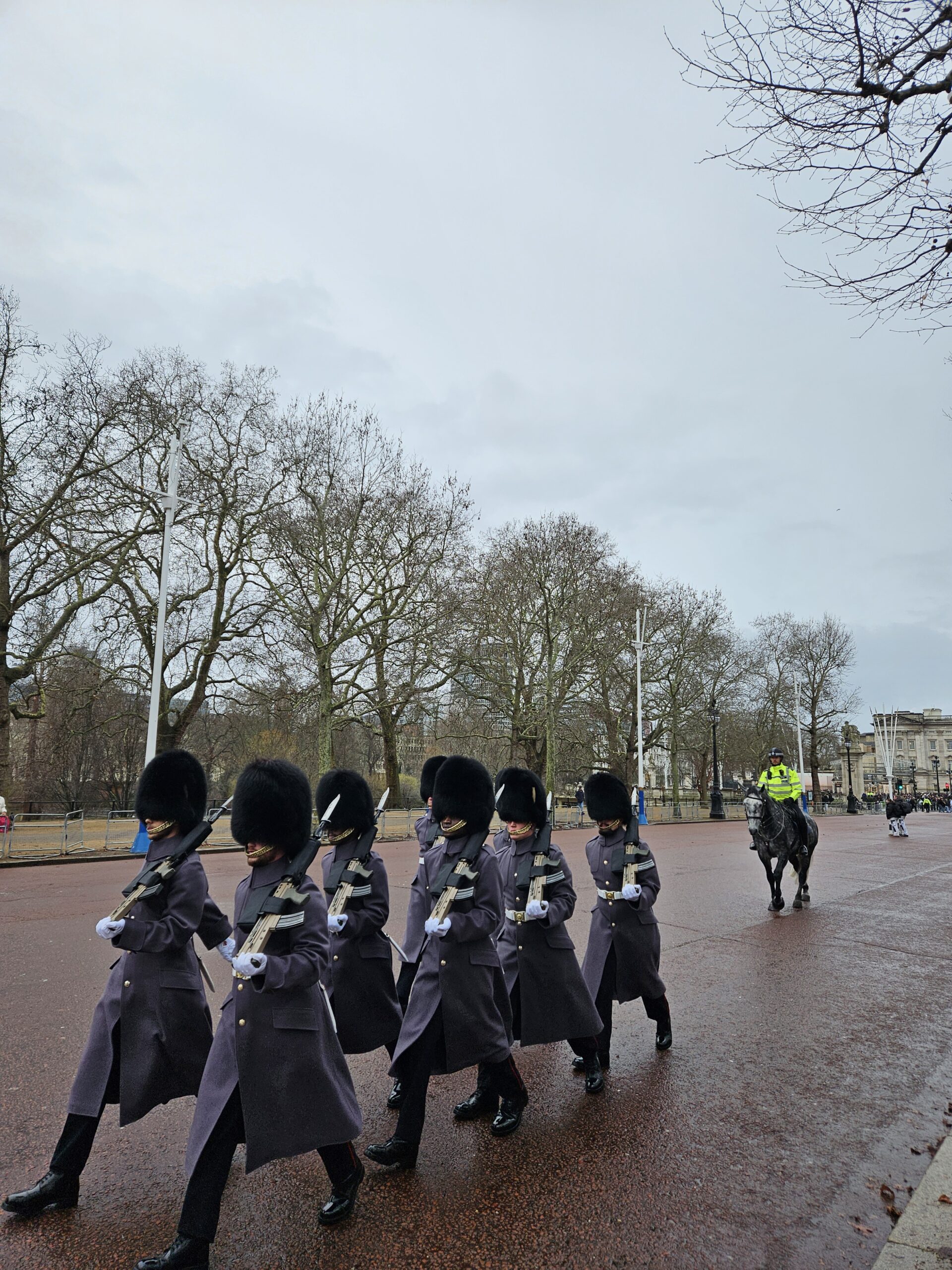
Watching the Changing of the Guard is one of London’s most iconic experiences but we’ve found many visitors don’t see very much or are underwhelmed with, “That’s it?”.
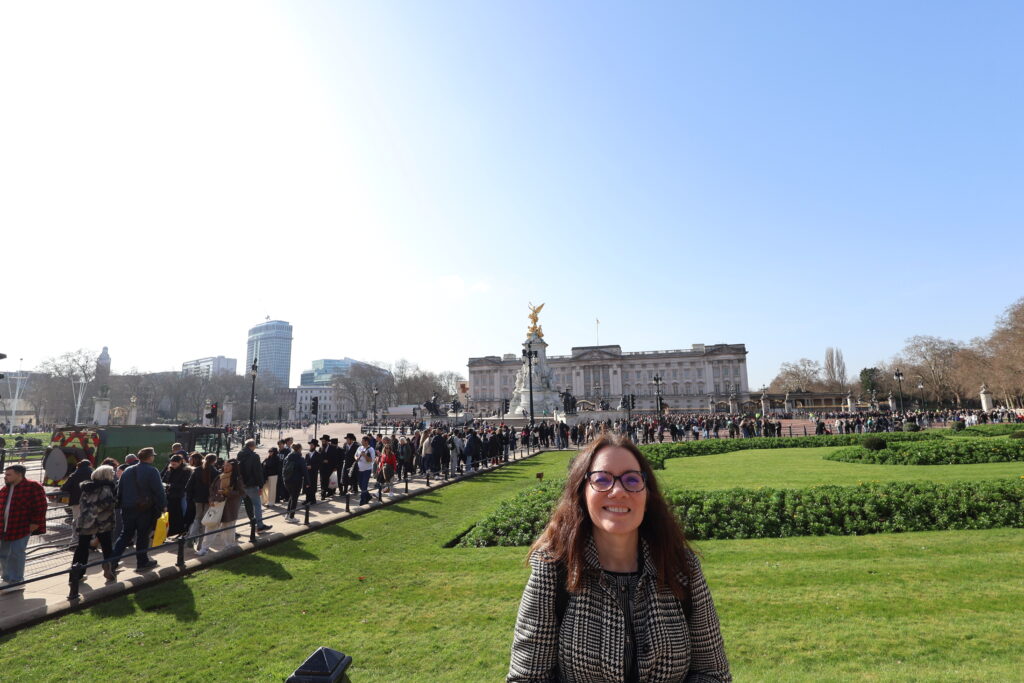
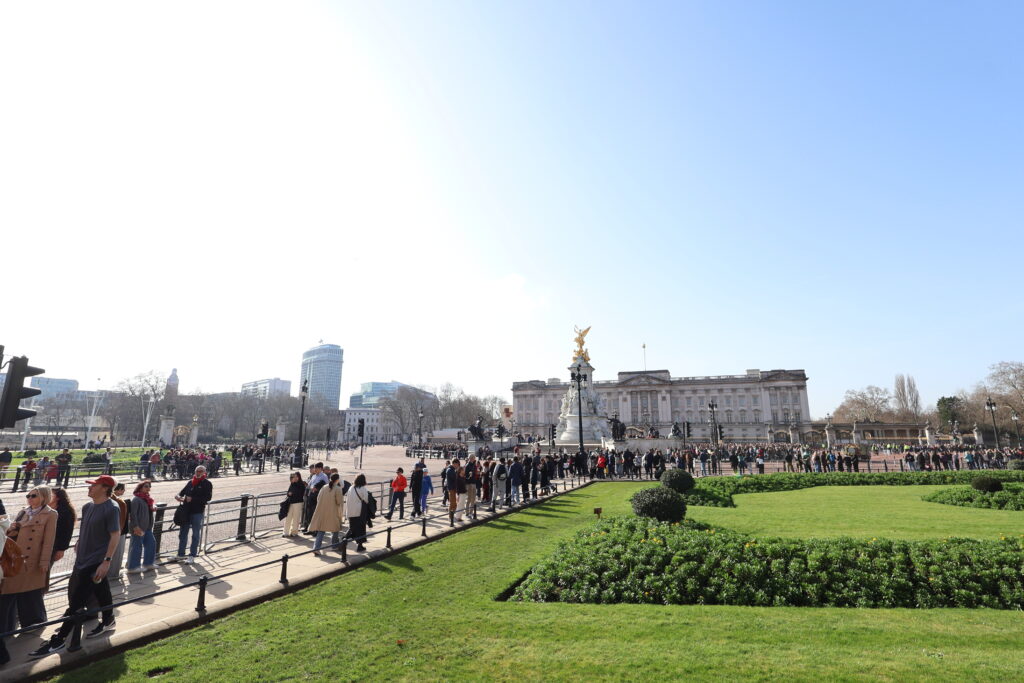
Every week, thousands of visitors arrive early at Buckingham Palace, squeeze shoulder-to-shoulder against the palace gates, wait for an hour or more, and then spend much of the ceremony trying to glimpse guards through a sea of phones, flags, and raised cameras.
The result? Many travelers leave wondering what all the fuss was about.
The good news is that there is a much better way to experience this famous British tradition.
If you understand how the ceremony actually works, you can see far more of the guards, enjoy the marching bands, avoid the largest crowds, and gain a much deeper appreciation for the history and pageantry behind the event.
In this guide, we’ll show you exactly how to see the Changing of the Guard in London, and why we recommend experiencing it with a knowledgeable small-group guide.
And if you want more personalized advice on your own London journey, contact us and we’ll be happy to help you experience London at your pace with your interests.
The Common Mistake Most Visitors Make
Search online for “Changing of the Guard London” and you’ll see countless recommendations telling visitors to arrive early at Buckingham Palace.
Technically, that’s not wrong.
But here’s what often happens:
- Visitors arrive 60–90 minutes early.
- They claim a spot along the palace railings.
- Crowds continue building behind them.
- By ceremony time, the forecourt area is packed.
- Much of the actual handover takes place far from view.
- Tall people, phones, and tour flags block sightlines.
You may spend more time waiting than actually watching.
The ceremony itself is much larger than what occurs directly in front of Buckingham Palace. The guards march from multiple locations, military bands perform throughout the morning, and several troop movements happen around St James’s Palace and Wellington Barracks. Yet most visitors only see a small portion of the overall event.
The actual “changing of the guard” is performed by the captains of the Old Guard and New Guard inside a small building where they sign a book to officially handover responsibility…and travelers cannot see it.
For many travelers, Buckingham Palace is actually the least rewarding place to experience the ceremony.
When we watch the ceremony, we do not stand near Buckingham Palace gates, but we’ve seen the immense crowds and challenge moving about.
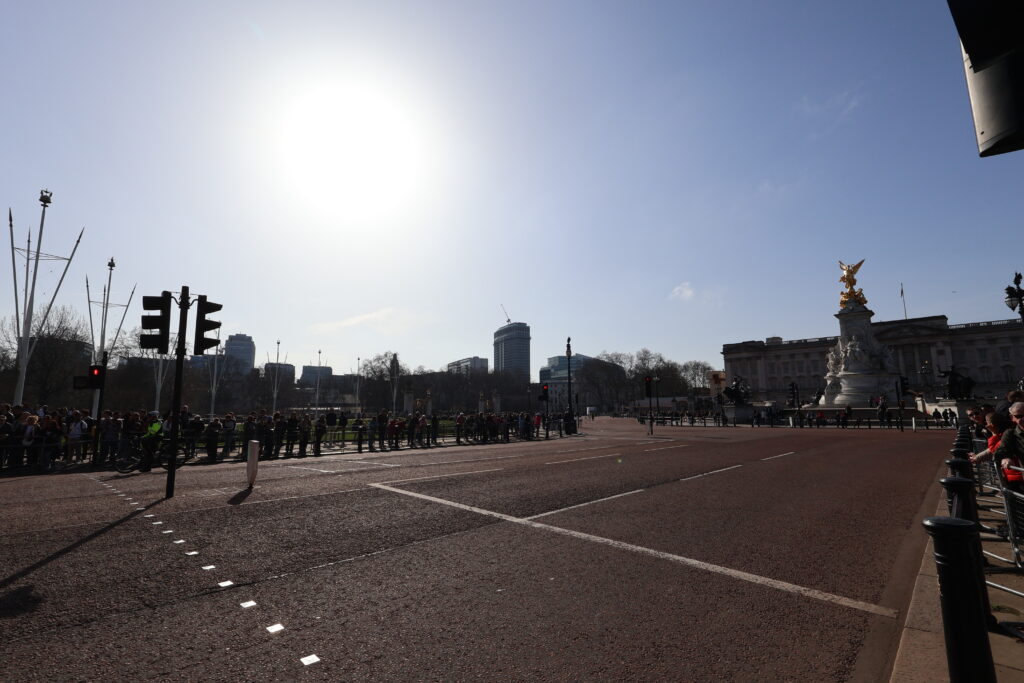
Tip: If you are walking or transiting by Buckingham Palace or The Mall between 10:30am and 12pm-ish, expect to be turned around or find it hard to walk through the crowds. Streets are closed to foot, cycle, and car traffic and police strictly enforce these conditions, but police will permit controlled pedestrian crossings at designated traffic light crossings – it’s just very crowded to get across the street.
Understanding How the Ceremony Works
The Changing of the Guard is not simply a photo opportunity.
It is a real military handover conducted by soldiers of the Household Division, responsible for guarding the King’s official residences. The ceremony represents the transfer of responsibility from the Old Guard to the New Guard.
The King’s Guard ceremony currently takes place at:
- Buckingham Palace
- St James’s Palace
and generally occurs on:
Monday, Wednesday, and Friday at 11:00 AM.
However, schedules can change and ceremonies may be modified or cancelled due to operational requirements, state events, security considerations, weather conditions, or military commitments. Always check the official Household Division schedule before your visit.
The Better Viewing Strategy
Instead of camping at Buckingham Palace gates, we recommend following the movement of the guards.
This allows you to experience the ceremony as a dynamic event rather than a crowded standstill.
Stop 1: Wellington Barracks
Wellington Barracks sits just south of Buckingham Palace and serves as the starting point for the New Guard.
This is one of the most practical and rewarding places to begin your morning because it feels like the ceremony is actually unfolding around you rather than being viewed from a distance. The barracks are the working home of the Foot Guards, so this is where soldiers assemble, prepare, and form up before marching out in full ceremonial dress. The atmosphere is disciplined and purposeful, but also far less chaotic than the palace forecourt.
The New Guard departs Wellington Barracks shortly before 11:00 AM to march toward Buckingham Palace.
Advantages include:
- Much smaller crowds
- Better photography opportunities
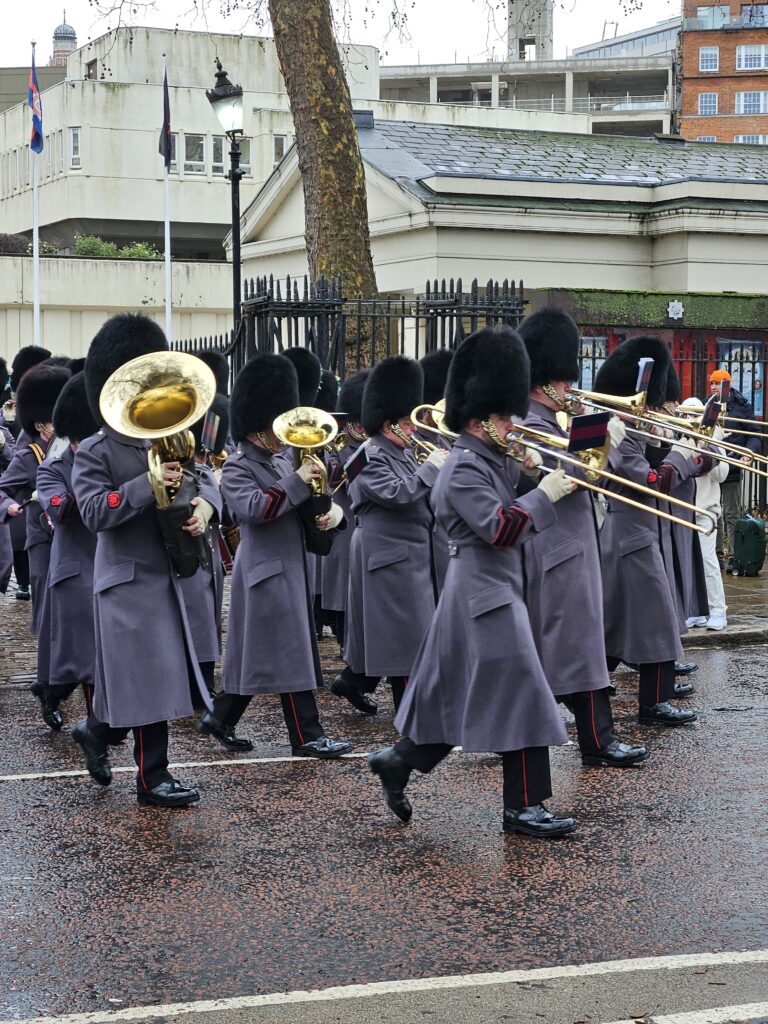
- Closer views of soldiers and bands
- Easier movement
- More space for families
You can actually see the guards rather than the backs of other tourists.
Stop 2: Walk Through St James’s Park
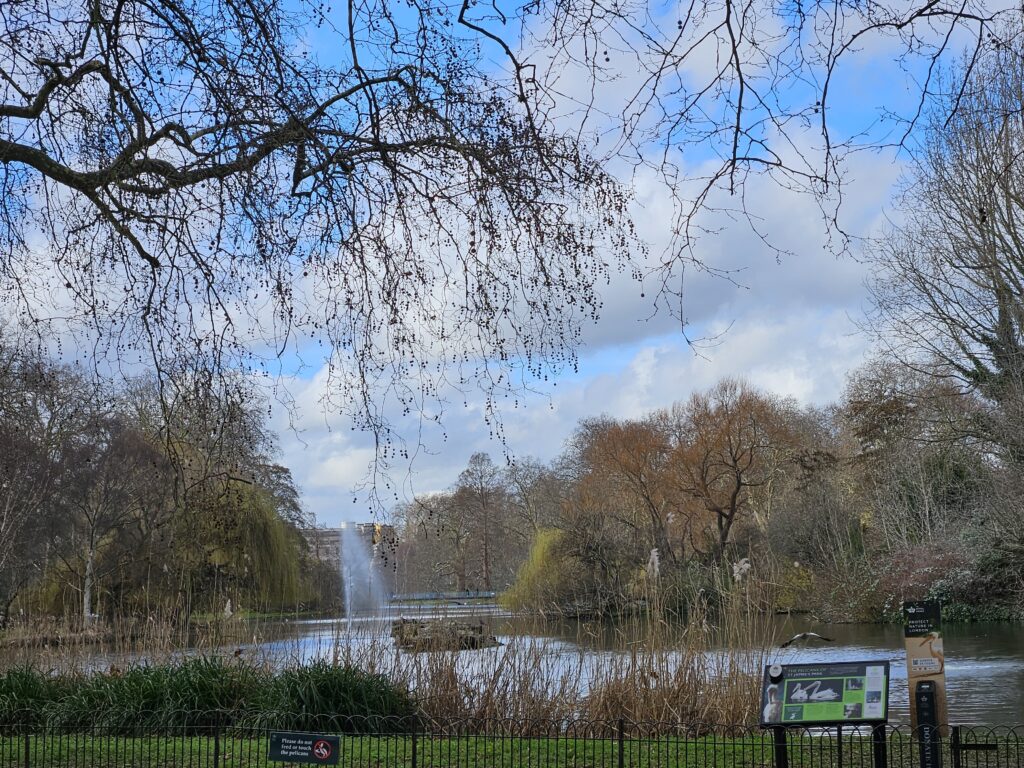
After viewing the preparations at Wellington Barracks, continue through beautiful St James’s Park.
St James’s Park is one of London’s most elegant green spaces, with tree-lined paths, open lawns, and views that make the royal setting feel much more atmospheric. It offers a calmer contrast to the busy streets around Buckingham Palace and gives you a chance to enjoy the ceremony route in a more relaxed way. Depending on where you position yourself, you may also catch glimpses of the palace framed by the park’s landscaping, which makes for excellent photos.
This route provides:
- Scenic views of Buckingham Palace
- A calmer atmosphere
- Excellent photo opportunities
- A chance to position yourself ahead of the marching guards
Many visitors never realize that one of London’s prettiest royal parks sits directly beside the ceremony route.
Stop 3: Watch the March Along The Mall
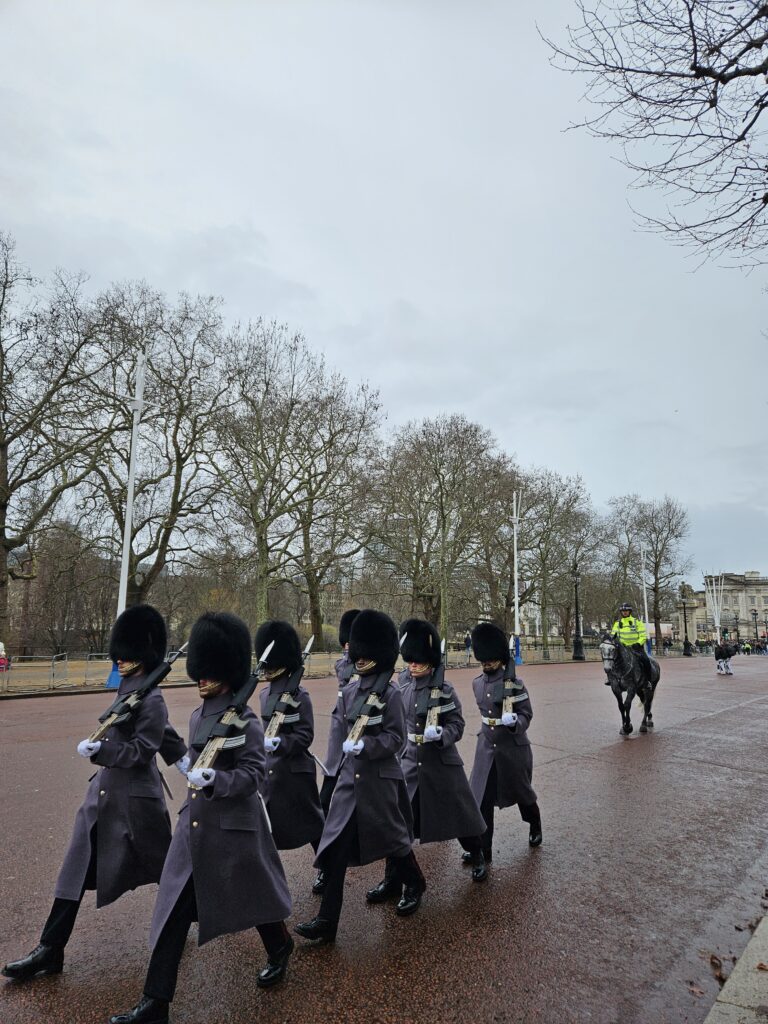
The Mall is the grand ceremonial avenue connecting Buckingham Palace and St James’s Palace, and onwards to Trafalgar Square.
This wide boulevard is one of the most recognisable ceremonial spaces in London. It has long been used for royal processions, state occasions, and national celebrations, which gives the Changing of the Guard a particularly formal and historic backdrop. Watching the guards march here is often far more memorable than standing at the palace gates because you can see the full formation moving with precision through one of the capital’s most symbolic streets.
You’ll see:
- Military precision marching
- Bands performing live music
- Officers leading formations
- Guards moving through London’s ceremonial heart
Because the procession is moving, the experience feels much more engaging than waiting behind railings.
Stop 4: St James’s Palace
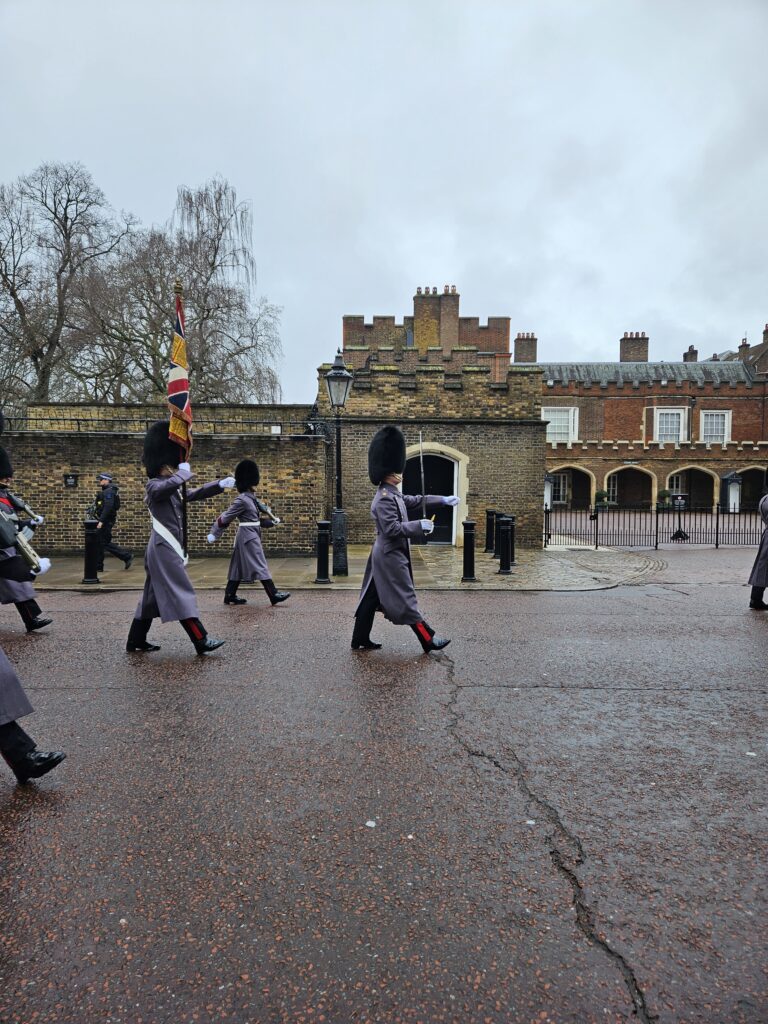
One of the hidden gems of the morning is St James’s Palace.
Many visitors don’t even know the palace exists, despite its important role in the ceremony.
St James’s Palace is one of the oldest royal palaces in London and remains an important ceremonial and administrative site for the monarchy. Although it is not the most famous palace in the city, it has deep royal significance and is closely tied to the traditions of the Household Division. The Old Guard forms up here before marching toward Buckingham Palace, and inspections and troop movements occur around 10:30 AM before the guards proceed down The Mall.
Viewing here often provides:
- Significantly smaller crowds
- Better photographs
- Closer proximity to the soldiers
- A stronger sense of ceremony
Some London guides prefer to begin their Changing of the Guard experience at St James Palace and work in the opposite order to the guides starting at Wellington Barracks.
Why a Small Group Tour Makes a Huge Difference
Could you do all of this independently?
Absolutely.
But many visitors find themselves confused by the timing, routes, and troop movements.
The ceremony involves multiple locations, multiple guard detachments, and precise timings that can be difficult to follow if you’re unfamiliar with the area.
This is why we often recommend a small-group Changing of the Guard tour.
A knowledgeable guide can:
- Position you in the best viewing locations
- Explain what you’re seeing
- Share royal history and traditions
- Navigate crowd patterns
- Help you avoid common mistakes
- Lead you between key viewing points
Instead of wondering what is happening, you’ll understand the significance of each movement, regiment, and tradition.
The experience becomes far more meaningful than simply watching soldiers march past. You will even learn why they wear grey uniforms in winter and red in summer, how much those bearskin hats weigh, and the differences between the 5 regiments responsible for guarding Buckingham Palace.
Many of these tours start nearby about 10am to assemble for the short walk to Wellington Barracks or St James’ Palace.
Don’t Miss Horse Guards Parade
Many visitors focus entirely on Buckingham Palace and overlook another excellent ceremonial experience.
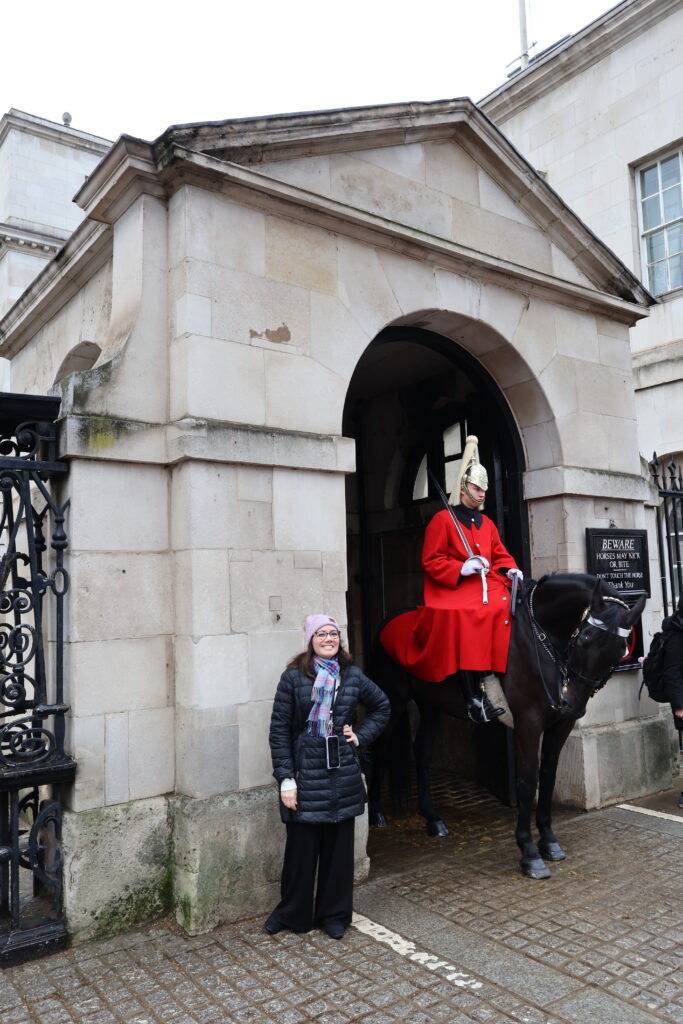
Horse Guards Parade is one of the most historic open spaces in central London and offers a very different but equally impressive royal spectacle. It is best known for the mounted Household Cavalry and the King’s Life Guard, whose presence adds a striking sense of tradition and pageantry to the area. The setting is spacious and open, which often makes it easier to see the action clearly than at Buckingham Palace, where crowds and barriers can limit your view.
The cavalry uniforms, horses, and historic surroundings create an impressive experience in their own right.
This is a much smaller event and occurs entirely at the Horse Guards Parade Monday through Saturday at 11:00am, and Sunday at 10:00am. You won’t see the Changing of the Guard for Buckingham Palace and the Horse Guards Parade but it’s impressive to see the guards nonetheless.
Tip: Do not enter the area marked by a white painted box on the ground around the mounted guard. You will get shouted at by the guard to “stand back”. Do not attempt to touch the horse or guard. Remember, these are still active members of the British military on-duty.
Some quality small-group tours include Horse Guards Parade as part of the overall royal London experience.
Timing Tips for the Best Experience
For the smoothest morning:
Arrive Early
Even if you’re avoiding Buckingham Palace gates, arrive before 10:30 AM.
Troop movements begin well before the official 11:00 AM ceremony.
Wear Comfortable Shoes
You’ll be walking between viewing locations rather than standing in one place.
Check the Schedule
The King’s Guard ceremony generally operates on Monday, Wednesday, and Friday, but schedules can change. Verify details before your visit.
Expect Crowds
This remains one of London’s most popular free attractions.
The goal isn’t avoiding crowds completely—it’s avoiding the worst crowds.
Is the Changing of the Guard Worth It?
Yes, when done well.
No, if you stand at Buckingham Palace; or do not have an interest in British military, ceremony, or the monarchy.
If your plan is to stand shoulder-to-shoulder at Buckingham Palace gates for a brief glimpse through hundreds of raised phones, you may leave disappointed.
But if you follow the guards’ route through Wellington Barracks, St James’s Park, The Mall, and St James’s Palace, you’ll experience far more of the ceremony, gain a better understanding of the tradition, and enjoy a more memorable morning.
For first-time visitors especially, a small-group guided tour can transform what might otherwise feel like a crowded photo stop into one of the highlights of a London trip.
The secret isn’t arriving earlier at Buckingham Palace.
It’s knowing where to go instead.
Frequently Asked Questions
What days does the Changing of the Guard take place in London?
The King’s Guard ceremony at Buckingham Palace generally takes place on Monday, Wednesday, and Friday at 11:00 AM, subject to operational requirements and schedule changes. Always verify the official schedule before visiting.
Note, when planning your itinerary, this is one of those events that has a fixed timeline. You cannot choose to visit this attraction in the afternoon or a day that it is not scheduled, unlike a museum with more opening hours. There are 3 occasions each week to view the full changing of the guard and a quality travel advisor will incorporate this into your plan.
We often pair the changing of the guard with a pub lunch then an afternoon visit to nearby Westminster Abbey, the Royal Mews, Churchill’s War Rooms, or even the visit to the official State Rooms of Buckingham Palace (when open to the public).
How early should I arrive?
We recommend arriving around 10:15–10:30 AM if viewing from Wellington Barracks or St James’s Palace. Arriving significantly later may mean missing important troop movements.
Is the Changing of the Guard free?
Yes. Viewing the ceremony from public areas is free.
Where is the best place to watch the Changing of the Guard?
We recommend Wellington Barracks, St James’s Palace, and The Mall rather than standing directly at Buckingham Palace gates.
Is a guided tour worth it?
For many visitors, yes. A guide helps you understand the ceremony, navigate the crowds, and position yourself for the best views throughout the morning.
Can the ceremony be cancelled?
Yes. Ceremonies may be altered, shortened, or cancelled, sometimes at short notice, due to operational requirements, state events, security concerns, weather, or military needs.
A quality guided tour should notify you of the cancellation when they know, and offer a refund or rebooking, but check the terms of sale for your tour.
Where can I view the entire ceremony?
It’s technically not possible to view every element of the entire ceremony of Old Guard departing, New Guard departing, changing, arrival of New Guard, because events are happening simultaneously at different geographical points and it’s nigh impossible to sprint to each location amidst the crowds and distance.
That’s why we suggest to time your viewings and be strategic where you view to see the most of the ceremony from the best vantage points.
We can help you plan a London journey that is strategic for your interests and pace without wasting time criss-crossing the city.